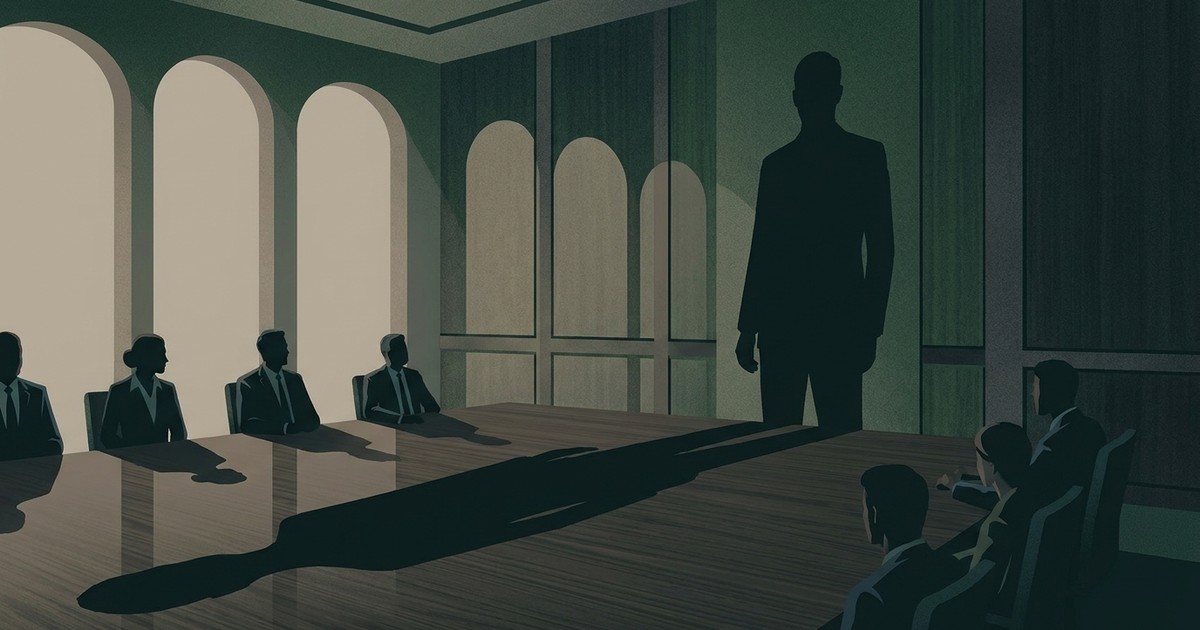
Every startup has an official answer to the question “who are the directors?” — it’s whatever the ASIC register says. The law’s answer is different, and for some of the people closest to a startup, more dangerous. Under the Corporations Act 2001 (Cth), “director” is defined by what you do, not what you were appointed to. A lead investor who runs the company through the founders, an adviser who has quietly become the decision-maker, a resigned founder who never actually let go, a lender steering a workout — each can be a director at law without ever signing a consent to act. And the label is not cosmetic: it carries the full set of directors’ duties and the personal liabilities that go with them.
The Definition: Appointed, De Facto and Shadow
Section 9AC of the Corporations Act defines a director in three ways. The first is the obvious one: a person validly appointed as a director or alternate director. The other two catch people who were never appointed at all:
- A de facto director — someone who acts in the position of a director, even though not validly appointed. The question is whether the person performs functions you would reasonably expect a director of that particular company to perform: top-level management decisions, committing the company to significant obligations, hiring and firing senior people, dealing with the company’s financiers as its directing mind. In Grimaldi v Chameleon Mining NL (No 2) [2012] FCAFC 6, a “consultant” who operated at board level — negotiating transactions, directing funds, acting as part of the company’s directing intelligence — was held to be a de facto director, title notwithstanding.
- A shadow director — someone whose instructions or wishes the appointed directors are accustomed to act in accordance with. The shadow director doesn’t act as a director; the real board acts for them, habitually, over time.
The definition contains one important carve-out: a person is not a shadow director merely because the directors act on advice given in the proper performance of functions attaching to the person’s professional capacity, or their business relationship with the directors or the company. That is what keeps lawyers, accountants and genuine consultants outside the net — as long as they stay on the advice side of the line. Advisers who graduate from recommending decisions to making them lose the protection.
There’s a companion trap in section 9AD: the definition of “officer” extends to a person who has the capacity to affect significantly the corporation’s financial standing — a limb aimed at people who in substance participate in running the company, not every powerful counterparty. In ASIC v King [2020] HCA 4, the High Court confirmed that a person can be an officer of a company while holding no office in it at all — there, the CEO of a parent company who exercised real control over a subsidiary. Officers owe the core statutory duties too, so even falling short of “director” doesn’t necessarily mean falling outside liability.
What the Label Costs
A de facto or shadow director owes everything an appointed director owes: the duties of care and diligence, good faith, and the prohibitions on misusing position and information in sections 180–183, exposure to civil penalties and disqualification, and — the one that matters most in a struggling startup — personal liability for insolvent trading under section 588G. The director penalty regime in the tax legislation uses the Corporations Act definition as well, so a de facto or shadow director can receive a director penalty notice making them personally liable for the company’s unpaid PAYG withholding, GST and superannuation.
What they don’t get is any of the machinery that protects appointed directors. Whether D&O insurance and deeds of indemnity reach an unappointed director depends entirely on their wording — some policies expressly extend to de facto and shadow directors, many don’t — so a person found to have been a director at law may discover they have the liability without the cover.
Investors and Lenders: Where the Line Actually Sits
The good news for investors is that Australian courts set the shadow-director bar reasonably high, and protecting your own commercial position doesn’t clear it. The leading authority is Buzzle Operations Pty Ltd (in liq) v Apple Computer Australia Pty Ltd [2011] NSWCA 109, where a liquidator argued that Apple, as the dominant supplier with security over the company, had become a shadow director. The courts disagreed, and the principles that emerged are the practical rulebook. A shadow directorship requires the board to habitually act as directors on the person’s instructions; it is not enough that a counterparty imposes conditions the company feels commercially obliged to accept. A lender or investor who insists on terms, covenants or consent rights to protect its own interests — even aggressively — is exercising its rights, not directing the company. That is why the standard VC toolkit of reserved matters and investor consent rights does not, by itself, make a fund a shadow director: a veto is defensive. The board still makes the decision; the investor just has the contractual power to block it.
But the protection is behavioural, not structural, and Standard Chartered Bank of Australia Ltd v Antico (1995) 38 NSWLR 290 shows the other side of the line: a 42% corporate shareholder that had nominees on the board and took control of the company’s financial and management decisions was held to be a shadow director — and liable for insolvent trading. The pattern to avoid is instruction rather than veto: an investor who directs management day-to-day outside the boardroom, a board that has stopped deliberating and simply implements what the fund says, a venture debt lender in a workout who moves from enforcing covenants to deciding which creditors get paid and whether the company keeps trading. Board observers sit in the same frame: merely attending and observing board meetings does not, without more, make someone a director — but an “observer” who in practice runs the meeting is collecting director-grade risk without a seat.
Founders: Your Own Shadow Problems
The doctrine isn’t only about outsiders. Startups generate home-grown de facto directors constantly: the “co-founder” everyone treats as a director but nobody appointed; the founder who resigned from the board in a dispute or a restructure and kept signing contracts and instructing staff; the parent or spouse who actually makes the calls behind a sole director. If someone is genuinely functioning as a director, the honest fix is usually to appoint them — the duties already apply, and formal appointment brings clear accountability and the chance to put D&O cover in place (noting the person must obtain a director ID before the appointment takes effect). If they shouldn’t carry that role, change the behaviour, not just the paperwork.
The line between influence and control is one of the recurring governance questions we deal with as startup lawyers in Sydney — usually when a round is being negotiated and someone asks how much control an investor can take before the control itself becomes a liability. Our venture capital team builds investor rights, observer terms and board protocols that keep everyone on the right side of it.
This article is general information only, not legal advice — whether a person is a de facto or shadow director turns entirely on the facts of their involvement. Viridian Lawyers advises Australian startups, investors and board members on governance, investor rights and director liability. If you’re worried someone in your company’s orbit is acting like a director — or that you are — get in touch.