You’ve pitched your startup, the investor is interested, and a term sheet is on the table. Then the email arrives: “Can you set up a data room?”
For many Australian founders, this is the moment the fundraising process shifts from storytelling to scrutiny. Due diligence is where investors verify that everything you’ve told them is true — and where deals quietly fall apart if a founder’s legal house isn’t in order.
The good news: there’s nothing mysterious about what investors want to see. The bad news: most startups aren’t ready when the request comes. Here’s how to make sure you are.
What Is a Data Room and Why Does It Matter?
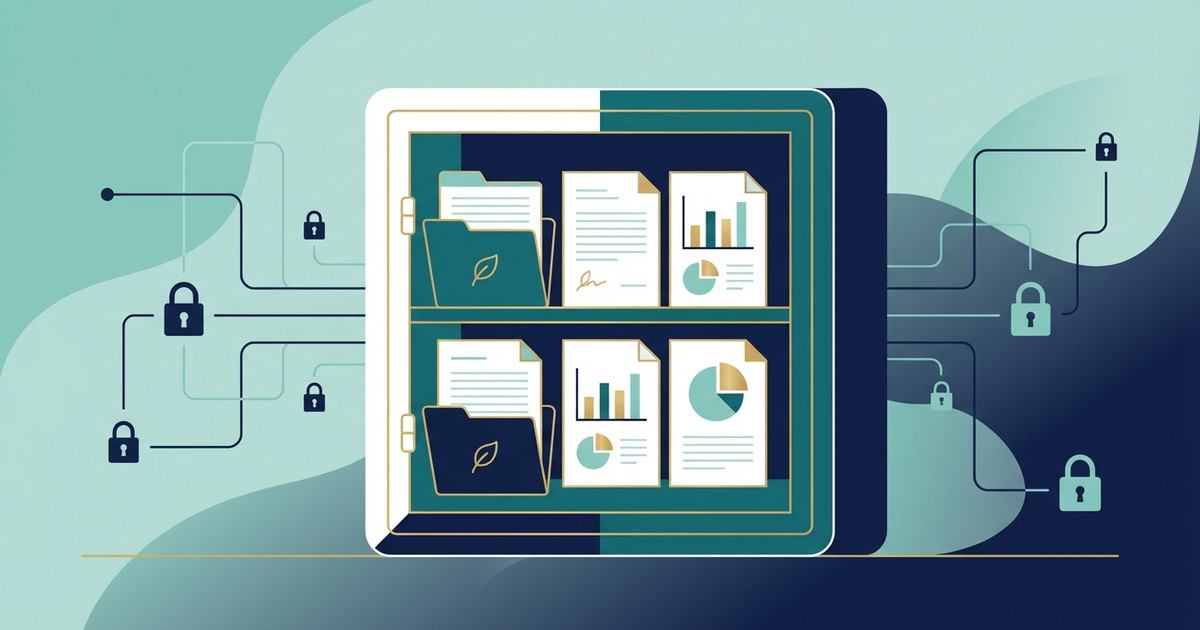
A data room is simply a secure, organised repository of documents that investors review as part of their due diligence process. In practice, it’s a virtual data room (VDR) — a cloud-based platform like Ansarada, Datasite, or even a well-structured Google Drive or Notion workspace — where you upload your company’s key documents for investor review.
The quality of your data room sends a signal before any document is opened. A well-organised, complete data room tells an investor that the founders are operationally disciplined, legally aware, and serious about governance. A half-empty folder with mislabelled files tells them the opposite.
Due diligence typically begins after a term sheet is signed — or at least agreed in principle — and runs until final investment documents are executed. For a seed round, it might take a week. For a Series A or beyond, expect two to four weeks of back-and-forth. The faster you can populate your data room, the faster you close.
The Core Categories
Every investor’s due diligence request list will vary, but they converge on the same core areas. Here’s what to prepare, organised the way most investors expect to find it.
1. Corporate Structure and Governance
This is the foundation. Investors want to understand exactly what entity they’re investing in, who owns it, and how it’s governed.
What to include:
- Certificate of registration and current ASIC company extract (Form 201 or current extract from the ASIC register)
- Company constitution — the replaceable rules under the Corporations Act 2001 (Cth) are rarely sufficient for a company taking external investment; investors expect a tailored constitution
- Shareholders’ agreement — if you have one (and you should)
- Cap table — a complete capitalisation table showing all issued shares, options, convertible instruments (SAFEs, convertible notes), and any unissued option pool, with a fully diluted view
- Share register — the statutory register maintained under section 169 of the Corporations Act, which must match your cap table exactly
- Board and shareholder resolutions — minutes of all board meetings and shareholder resolutions, particularly those authorising share issues, option grants, or significant transactions
- ASIC annual statements — evidence that your company’s ASIC details are current and all annual review fees are paid
What investors are really checking: That there are no surprises in the ownership structure. Mismatches between ASIC records and your cap table, missing share transfer forms, or undocumented verbal equity promises are among the most common issues that delay or derail a round.
2. Previous Funding Rounds
If you’ve raised capital before, investors want the paper trail.
What to include:
- Prior investment agreements — subscription agreements, SAFE instruments, convertible note deeds, and any side letters
- Shareholder consents — evidence that existing shareholders approved prior share issues (especially relevant where pre-emptive rights exist)
- Disclosure documents — any information memoranda, offer documents, or section 708 notices relied upon for prior raises under the fundraising exemptions in Chapter 6D of the Corporations Act
- Valuation support — if you’ve had a formal valuation, include it; if not, be prepared to explain how prior round pricing was determined
What investors are really checking: That prior rounds were conducted lawfully and that no existing investor has rights (like anti-dilution protections, consent rights, or side letter commitments) that could complicate the current raise.
3. Intellectual Property
For technology startups, IP is often the primary asset — and the primary concern.
What to include:
- IP assignment agreements — signed agreements from every founder, contractor, and early employee confirming that all IP created for the company has been assigned to it
- Trade mark registrations — certificates and status reports from IP Australia for any registered or pending marks
- Domain name registrations — evidence of ownership for all company domains
- Patent filings — if applicable, details of any provisional or standard patent applications
- Open-source software disclosure — a list of open-source components used in your product, with their licence types (particularly flagging any copyleft licences like GPL that could affect your proprietary code)
- Key technology licences — any third-party software or technology licences material to your product
What investors are really checking: That the company — not the founders personally, not a contractor, not a university — owns the IP. Missing IP assignments are the single most common legal deficiency in early-stage Australian startups, and the one most likely to cause an investor to pause.
4. Key Contracts
Investors want to see the agreements that drive your revenue and define your obligations.
What to include:
- Customer agreements — template terms and any material bespoke contracts, particularly with your largest customers
- Supplier and vendor agreements — contracts for critical services (hosting, payment processing, data providers)
- Partnership or channel agreements — any revenue-sharing, distribution, or strategic partnership arrangements
- Lease agreements — if you have physical premises
What investors are really checking: Revenue concentration risk (are you dependent on one or two customers?), unfavourable terms (exclusivity clauses, unlimited liability, termination for convenience), and change-of-control provisions that could be triggered by the investment itself.
5. Employment and Team
The people behind the company matter as much as the product.
What to include:
- Employment agreements for all employees — particularly founders and key personnel
- Contractor agreements — for any independent contractors, especially those involved in product development
- Employee share option plan (ESOP) — the plan rules, any trust deed, individual option offer letters, and a register of all options granted, exercised, lapsed, or forfeited
- Confidentiality and restraint provisions — evidence that employees and contractors are bound by appropriate confidentiality, IP assignment, and (where enforceable) non-compete obligations
- Organisational chart — a current org chart showing reporting lines and team structure
What investors are really checking: That key people are locked in (vesting, notice periods, restraints), that the ESOP is properly structured under Division 83A of the Income Tax Assessment Act 1997 (ITAA 1997) for tax-deferred treatment, and that no critical team member is working without a signed agreement.
6. Financial Information
Even if your startup is pre-revenue, investors need to understand the numbers.
What to include:
- Historical financial statements — profit and loss, balance sheet, and cash flow statement for each financial year since incorporation, plus the current year-to-date
- Management accounts — monthly or quarterly internal financials
- Financial model and projections — your forward-looking model, ideally covering 24–36 months
- Bank statements — current statements showing cash on hand
- Debt schedule — any outstanding loans, credit facilities, or government grants with repayment obligations (including R&D Tax Incentive advance claims)
- Tax returns and BAS lodgements — evidence of compliance with ATO obligations
What investors are really checking: Cash runway, burn rate, revenue trajectory, and whether the company’s tax affairs are in order. Outstanding tax liabilities or unfiled BAS returns are red flags that suggest broader operational issues.
7. Regulatory and Compliance
Depending on your industry, this section may be thin or extensive.
What to include:
- Licences and registrations — any industry-specific licences (e.g., AFSL for fintech, TGA registration for healthtech)
- Privacy policy and data handling — your current privacy policy, any privacy impact assessments, and evidence of compliance with the Privacy Act 1988 (Cth) and the Australian Privacy Principles
- Insurance policies — professional indemnity, public liability, directors’ and officers’ insurance, and cyber liability cover
- Litigation register — a summary of any current, threatened, or potential legal disputes
What investors are really checking: That you’re operating lawfully and that there are no undisclosed legal risks. An investor finding out about a threatened IP infringement claim from a Google search rather than your data room is a trust-destroying moment.
Building Your Data Room: Practical Tips
Start now, not when a term sheet arrives. The best time to build a data room is before you need one. Treat it as a living repository that you maintain continuously — not a frantic scramble when an investor asks for it.
Use a consistent folder structure. Mirror the categories above. Label files clearly with descriptive names and dates — 2026-03-ESOP-Plan-Rules.pdf is far more useful than Document(3).pdf.
Phase your disclosure. You don’t need to give every investor everything upfront. Pre-term-sheet, share the pitch deck, a summary cap table, and high-level financials. Post-term-sheet, open up the full data room. This protects sensitive information and respects the process.
Flag known issues. If there’s a missing IP assignment from an early contractor, or a shareholder resolution that was never formalised, flag it proactively in a “disclosure schedule” or covering memo. Investors expect imperfections in early-stage companies. What they don’t forgive is discovering problems you tried to hide.
Keep ASIC records current. This seems basic, but a surprising number of startups have outdated ASIC records — wrong registered address, former directors still listed, share issues not notified. Run an ASIC company extract before populating your data room and fix any discrepancies.
The Payoff
A well-prepared data room doesn’t just help you close your current round faster — it forces you to get your legal house in order in a way that strengthens your company long after the cheque clears. Every document you prepare, every agreement you formalise, and every register you update is an investment in operational discipline that compounds over time.
The founders who close rounds quickly aren’t necessarily the ones with the best metrics. They’re the ones who can answer every question an investor asks — and prove it with a document.
If you’re preparing for a raise and want help getting your data room in order — or if you’ve already received a due diligence request list and need to fill the gaps — get in touch. We help Australian startups prepare for investor scrutiny so the deal closes on schedule, not on the lawyer’s timeline.